Search

Tuesday, 4 November 2014

The criminologist's dilemma: To what extent is a criminal born not made?


Introduction
This article  will analyse the claim that ‘criminals’ are predisposed from birth to commit crimes. This has always been an appealing topic in criminology because if we can understand what causes people to commit crime, then we may be able to reduce crime rates. If criminals are born, law abiding citizens can live in the comfort of knowing that criminals are only capable of such evil crimes because they are not ‘normal’ like the rest of the law abiding population. However we would risk creating a sub-species of humans who are labelled ‘criminals’ even before they have committed a crime and therefore could be falsely accused of potential crime. As a result of this  the foundational principles of justice in the UK criminal justice system would be destroyed. In this essay I will examine the question: To what extent is a criminal born not made? from three perspectives. Firstly the philosophical perspective, whether or not we have a fixed human nature and how that affects our ability to commit crimes. Secondly, what exactly makes us commit crimes, and thirdly, the control of our behaviour through training and whether we can change people who show the characteristics of a criminal?

Is crime part of human nature?
Philosophers have been debating about human nature for centuries. In this book Leviathan[1], Hobbes looks at the ‘state of nature’ a hypothetical situation before society, where man is left without social order and hierarchy and concludes that ‘life in a state of nature would be nasty brutish and short’. This encapsulates Hobbes’ view that humans are naturally unsociable and will commit crimes in order to satisfy their own hedonistic needs.[2] In order to remedy this Hobbes explains that society provides safety by means of a ‘social contract’ whereby we agree to live in a social format in order to be protected from the brutal state of nature we would otherwise be in. Hobbes goes on to explain how in society we are controlled by the sovereign, whom is a mortal god and keeps us in order, ensuring we are stopped from committing the acts we would be naturally inclined to perform if we were left in a natural state.

In terms of whether criminals are born or made, Hobbesian philosophy suggests that everyone has the ability to commit crimes and naturally we all would. Society saves us from our own criminal instincts but still gives us the safety and security we need to survive, the safety and security that in a state of nature would lead to us committing crimes. It could be argued that we cannot test the theory because we can never recreate a state of nature and find out exactly what people would do if there were no laws or social hierarchy. However, in response to this I would argue that in times of war and social collapse humans tend to act in a more criminal and instinctive way as the social boundaries that once confined our behaviour crumble.  Plato famously creates a similar thought experiment in ‘The Republic’[3] called the Ring of Gyges whereby he postulates that if we could have a ring that allows us to remain undetected we would commit crimes and immoral acts because we would know that we cannot be punished for it. For me, the London riots of 2011[4] are a prime example of this. In 2011 riots began after a teenager was shot by police in Tottenham. By the end of August millions of pounds worth of damage had been done in arson attacks, lootings and acts of vandalism. The mob mentality shown in these riots was a product of the belief that not everyone could be arrested and stopped all at once. However, many people who had no previous convictions later got arrested for rioting and police believe that this was because of their false belief that they would go unpunished. Keir Starmer QC argued, in an article for the Guardian, that it was far more important to ensure that the rioters were punished quickly, so they knew that they would not get away with their crimes, than it was to ensure they got lengthy sentences.[5] This is a very strong argument based on the classicist view that certainty in punishment will act as a better deterrent than severe punishment because criminals will know that they will be punished for criminal behaviour and this is what makes them think twice about whether the crime really is worth committing.

Opposing Hobbes is the famous Swiss philosopher Rousseau[6] who argues that a state of nature would be a state of paradise. For Rousseau,  man is naturally altruistic and society creates the opportunity to be evil and commit crime by giving us land to compete over and opportunities to fight for. Rousseau explained that when a man first marked out a piece of land as his own the marking should have been torn down and many crimes and wars would have been prevented by doing so. His salient point is that we should have remembered that the fruits of the Earth belong to everyone and claiming ownership and rights over the Earth leads to us being taken out of our natural altruistic state and into a state of brutal competition for survival over limited resources.

When applying Rousseau’s philosophy to the question: To what extent is a criminal born or made, it is clear that criminals are made by social and environmental conditions that create situations where crime is effective or even necessary in order for humans to be successful in society. For example the need to steal if we are starving; the economics of society dictates that money is needed to pay for food and food from the Earth is sold and not shared between humans. This fundamental idea that crime is a result of environmental and social factors has blossomed in modern times and will be covered in the next section when I consider what makes humans commit crimes.

Can we overcome the natural thirst for blood?

 In 1810, German physicians Gall and Spurzheim[7] conducted experiments in phrenology[8] to try to discover how the shape of the skull linked to a person’s criminal tendencies. Gall and Spurzheim believed that the human mind was made up of different faculties, each represented in a different area of the brain. They hypothesized that each of the areas of the skull were proportional to the person’s propensities. They believed that the skull fitted around the brain so by feeling the shape of the criminal’s skull they could measure the area of the skull that overlies the corresponding area of the brain and work out their personality traits. A large area meant that the criminal used that faculty extensively and a smaller area meant that faculty was less prominent in that particular criminal. They then used these findings to construct diagrams of the criminals’ skulls and list their natural tendencies. The findings were not meant to reveal that certain criminals had certain tendencies that they could not change; in fact Gall and Spurzheim believed that even natural inclinations towards traits such as aggression could be combatted by strict training and will power. Their main conclusion was that natural tendencies to commit crime can be found using phrenological methods and that the criminals with larger measurements in areas that represented the aggressive, violent and angry faculties were physically pre-determined to be criminals if they did not receive training to overcome their natural inclination, towards crime. Although phrenology is now an obsolete science Gall and Spurzheim’s assumption that personality traits can be found in localized parts of the brain is considered a foundation of neuroscience
Phrenology diagram- as used by Gall and Spurzheim. Image source: https://sites.google.com/site/physiciki/Home/pseudoscience/period-2/phrenology

Early positivism shared a belied in determinism[9]. Determinists believe that crime is a caused by individual, social or environmental factors depending on the context. For example, poverty is more likely to cause someone to steal food or possessions to sell for money than any natural instinct. While determinism is an important position, in modern criminal justice systems it is rejected on the grounds that if the person who commits a crime, such as stealing, only did so because of a social factor and not through their own free will then punishing them for an external factor they had no control over is unjust. Punishment, on the contrary appeals to more common sense ideas of responsibility.

There are two main categories of determinism: hard determinism[10] and soft determinism[11]. Hard Determinism is the belief that all of our choices to act are already pre-determined. For example a thief’s desire to steal is determined by a multitude of factors including the fact he has stolen in the past and gained respect from his peers in doing so and he enjoys the thrill of stealing and the possibility of getting caught. If hard determinism is right, then the criminal justice systems of modern democratic societies face huge issues because it means that criminals are being punished despite having no choice but to commit crime and no free will to overcome these predetermined factors.

Soft determinism combats the issues associated with having no free will by arguing that our choices are only pre-determined to an extent. We will have past experiences and preferences but ultimately we can override these determinations and make the complete opposite choice if we want to. Therefore, although the thief may enjoy the thrill of stealing, the risk associated with getting caught and the respect he receives from his peers for getting away with the crime, he still has enough free will to be able to choose not to commit the crime at all and seek thrills and respect from another legal activity. Soft determinism therefore allows determinism as a theory to be correct but still allow criminals to be punished because their crimes are a  partially a result of free will.  Neither hard nor soft determinists would go as far as to say that criminals are born but hard determinists would argue that they cannot be held responsible for their crimes because they were caused by external forces that they cannot resist, whereas soft determinists would argue that criminals are made because they retain the free will to be able to act on determinist factors or not.

Finally I shall consider Bentham’s Utilitarianism[12]. Bentham believed that humans are naturally hedonistic and will do whatever makes them happy. He formulated a hedonic calculus[13] whereby the person weighs up the advantages and disadvantages of an action before deciding which choice to make. If hedonic calculus is accurate, it suggests that criminals are rational human beings like law abiding citizens who think carefully about the consequences of their actions. Bentham then suggested a normative theory of utilitarianism whereby people should act for the greatest good of the greatest number. This is the primary underpinning of modern democratic criminal justice systems. Criminals are punished because they are rational human beings who chose to break the law and need to be rehabilitated or deterred so that in society the greatest good can be done for the greatest number. However, it should be noted that Bentham’s utilitarianism was a normative theory not descriptive and so just because people should do the greatest good for the greatest number does not mean that in practice they actually do. If someone acts selfishly and commits a crime that hurts more people than it helps, Utilitarian’s argue that  they should be  punished because they put their hedonistic needs before those of society.

How can we control the urge to commit crime?

In this final section I will consider how we control the urge to commit crime. Lombroso’s theory of avatism[14] argued that criminals are born and are essentially evolutionary throwbacks that resemble ancestral forms of life. This theory of avatism states that criminals usually have ancestral characteristics such as large ears, thick lips and large eye orbits. Criminals who commit crimes in acts of passion have something in their natural temperament that makes them instinctive and primitive and these impulses cannot be changed. This theory, although in its physical sense is outdated and disproven, has led to further experiments about the physicality of criminals. For example, Sheldon[15] conducted experiments that linked a large physical build to higher chance of committing crime. More recently, in the 1990s with the torture and murder of Jamie Bulger[16] committed by 2 boys aged 10 and 11 there has been a new urge to discover exactly how a child so young could be capable of such evil. 

Child murderers have always been somewhat of a phenomenon to criminologists, as they are in the unique situation of still being young enough to have not learnt much about which behaviours are socially acceptable, but enough to know what their natural instincts tell them to do and what they have learnt from their social environment. Bandura[17] created an experiment whereby he claimed that crime is a result of internal processes, in the experiment a group of children were shown a video of an adult attacking a ‘bobo’ doll and the other group of children were not shown anything. When placed in a room with the doll, the children who saw the video began violently attacking the doll and the children who saw no video were far more passively playing with the doll. For Bandura, this proved that a tendency to commit violent crime is a result purely of a child’s instinct to copy a parent or other adults and therefore to control this behaviour we should be monitoring adult’s behaviour around young children and controlling the level of violence they see from role models such as TV character, sportsmen and other children.

Finally, famous classicist Beccarria[18]argued that criminals are completely rational people like everybody else, this led to the creation of rational choice theory whereby it is believed that crimes will be committed if the advantages outweigh the disadvantages. The notorious case of R v Ahluwalia[19] supports this theory. In Mrs Ahluwalia’s case she was systematically beaten and raped by her husband over a number of years until one night she doused him in petrol and set fire to the bed he was sleeping him, killing him. This case demonstrates clearly that even murderers make rationale choices. Mrs Ahluwalia decided that a life possibly in prison away from her family and friends would be worthwhile, given that the alternative was a future filled with abuse and rape at the hands of her husband.  Classicists would argue that one way to deter criminals is to make punishment a certainty so that would-be criminals are less likely to deem the advantage of committing a crime is more worthwhile that the certain punishment they will receive.

Conclusions

To conclude, the claim that some individuals are born potential criminals in that they have natural instincts that sway towards aggression and violence holds great appeal.  This is an internal process not linked to their physical build. However, even assuming that someone is naturally inclined towards a life of crime their social and environmental surroundings can mean they will not act on their primitive urges. Links between crime and the criminal’s physical appearances such as that suggested through the science of Phrenology has been outdated by modern psychology which shows no link between brain physicality and crime. However, ongoing experiments looking at the link between high levels of hormones such as testosterone and high tendency towards violence[20] suggest that these people are more likely to commit crimes, but again this can be controlled by will, therapy and training. The argument that criminals are rational is very strong and cases such as that of Mrs Ahulwalia suggest that even in crimes of passion they have weighed up the good that will come from committing the crime against the bad. Changes to the law, influenced by classical criminology such as ensuring that punishment is certain, would mean that people would be less likely to find the advantages crime outweigh the disadvantages and so crime would be reduced.


[1] Thomas Hobbes, Leviathan (first published 1651, Penguin 1985)
[2]Julia Driver ‘The History of Utilitarianism’ (Stamford Encyclopaedia of Philosophy, 27 March 2009) http://plato.stanford.edu/entries/utilitarianism-history/ accessed 26/03/14 at 16:45
[3] Plato ‘The Republic of Plato’ (translated by Cornford, first published Oxford University Press 1941) Book 2: Ring of Gyges
[4] London Riots- http://www.bbc.co.uk/news/uk-england-london-14439970
[5] //www.theguardian.com/uk/2012/jul/03/riot-prosecutions-sentences-keir-starmer
[6]Jean-Jacques Rousseau, ‘Discourse on Inequality’ 1754( first published by  Marc-Michel Rey in 1755)
[7] Franz Josef "On the Functions of the Brain and of Each of Its parts: With Observations on the Possibility of Determining the Instincts, Propensities, and Talents, Or the Moral and Intellectual Dispositions of Men and Animals, by the Configuration of the Brain and Head, Volume 1." (1835  Marsh, Capen & Lyon)
[8]The Encyclopaedia Britannica: Phrenology http://www.britannica.com/EBchecked/topic/458369/phrenology accessed on 16/03/14 at 17:27
[9], Peter Van Inwagen ‘An essay on Free Will’ (Oxford University Press 1983)
[10] Richard Doubles The Non-reality of Free Will (1995): Hard Determinism
[11] Ibid: Soft Determinism
[12] Julia Driver ‘The History of Utilitarianism: Section 2: The Classical Approach’ (Stamford Encyclopaedia of Philosophy, 27 March 2009) http://plato.stanford.edu/entries/utilitarianism-history/ accessed 26/03/14 at 17:41
[13] Hedonic calculus http://philosophy.lander.edu/ethics/calculus.html accessed on 26/03/14 at 18:00
[14] Cesare Lombroso ‘Crime, Its Causes and Remedies’ translated by Henry Horton (Little Brown and Company 1911)
[15]Arraj, ‘Tracking the Elusive Human Volume 1: Part II: W.H. Sheldon's Somatotypes’ Inner Growth Books LLC 1988
[16]Scott, ‘Death of James Bulger’ http://www.crimelibrary.com/notorious_murders/young/bulger/1.html accessed 25/3/14 14:35
[17]Saul McLeod ‘Bobo Doll experiment’  published 2011: Bandura’s Bobo doll experiment http://www.simplypsychology.org/bobo-doll.html accessed 21/03/14 at 17:35
[18] Becarria ‘On Crime and Punishments’ (first Published in Italian in 1764) English Translation 2000 University Press Cambridge
[19] R v Ahluwalia [1993] 96 Cr App R 133
[20] Book, Starzyk and Quinsey ‘The relationship testosterone and aggression: A meta –analysis’ Aggression and Violent Behaviour: A Review Journal, Vol 6, Issue 6, 579-599

Wednesday, 22 October 2014

Children and Families Act 2014

I am very humbled to announce that my original article on this topic has now had to be removed as it has been published by The Lawyer magazine.
Please follow this linkhttp://ml2b.thelawyer.com/3027417.article?mobilesite=enabled
Thank you so much to each one of you 1800 readers I could not have done this without you.

Kelly Thornton

Tuesday, 7 October 2014

Transatlantic Trade deal: A global union or a constitutional nightmare?


The Transatlantic trade deal: what is it?
The purpose of the Transatlantic Trade and Investment Partnership (TTIP) is a deal which will enable the US and EU to remove their regulatory differences. Prima facie, this seems like a great idea and a good way to create a more global and free market however with the shock statement from Lord Livingstone yesterday saying that this deal will include the NHS it seems the deal will do more damage than good.


Image source: http://www.nwoo.org/2014/06/21/us-velvyslanectvi-v-nemecku-da-20-000-usd-na-ttip-propagandu/


The issue
The problem with the TTIP is it will provide businesses with the power to sue governments whom defending their citizens.  Many legal theorists and lawyers take issue with the TTIP because It would allow a secretive panel of corporate lawyers to overrule the will of parliament and destroy our legal protections. This goes against the key principle of the UK's constitution: Parliamentary Sovereignty.

The mechanism through  all this will happen is known as investor-state dispute settlement. The shocking news is that this settlement is already being used in many parts of the world to destroy regulations protecting people and the planet. Investor-state dispute rules found in in trade treaties allow companies to sue the countries that signed the treaties. Worryingly the rules are enforced by panels which are not safe-guarded, the hearings are  secret and the judges are corporate lawyers, many of whom work for companies of the kind whose cases they hear. This is all gobsmackingly unconstitutional and the defenders of fair trials and human rights are up in arms about it. Secret hearings limit the public's right to see current cases published and this risks clouding the Rule of Law and creating a less transparent and unjust legal system here in the UK. The idea that some of the judges may be biased means that the defendants will never be guaranteed a fair trial, a human right under the HRA 1998 s 6. Worst still is the fact that this entire system is not subject to appeal as citizens and communities affected by their decisions have no locus standi.

For more information surrounding the debate about the Investor- state dispute settlement please see this great opinion piece in the Washington Post http://www.washingtonpost.com/opinions/debating-the-investor-state-dispute-settlement/2014/10/05/2c2477ec-4b15-11e4-a4bf-794ab74e90f0_story.html

The NHS
The big worry surrounding the TTIP is that it could lead to the NHS being bought by a big commercial player and there is nothing that we can do to prevent this.  It will give big business vast new powers over public services which could see our human rights breached and environmental protection rules disregarded. 

For a more detailed analysis of the threat to the NHS please see: http://www.theguardian.com/business/2014/sep/07/trade-unions-trade-deal-threat-to-nhs

Conclusion 
The conservatives have been  made aware of the opposition to the TTIP and suggest that it will benefit the UK by £10bn but statistics also show that 1m jobs will be lost in the EU. The conservatives are trying to kill off the opposition by insisting that those opposing the TTIP  are simply anti-american and that this is too good an opportunity to miss as it could mean we sell our NHS services to the US. However, this is only one side of the picture on the other thousands if not millions of jobs will be lost, big public authorities could be nationalised and our constitution faces a future in tatters. There is huge outcry for a referendum on this issue. However, despite the TTIP being a constitutional nightmare it is unlike to result in a referendum come as it seems Mr Cameron has made up his mind.

Tuesday, 23 September 2014

Recklessness and Intention- a criminal law conundrum


The value of intention and recklessness in English Criminal Law

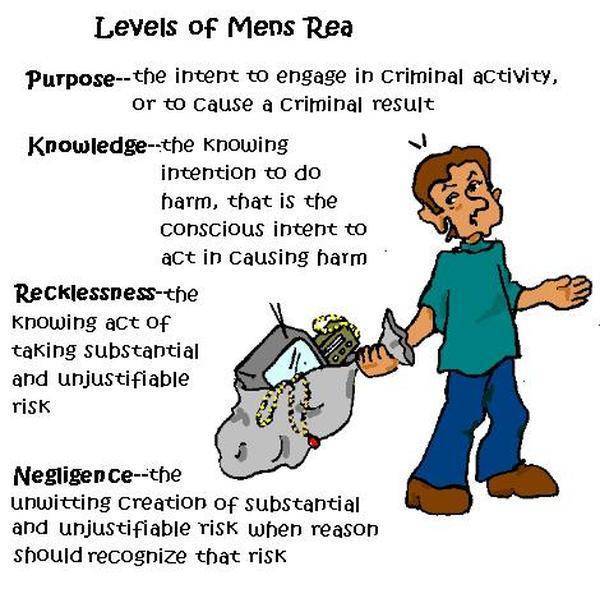
Intention and recklessness are both vital in English criminal law. It is a defendant’s intention which is crucial when courts decide if they had a guilty mind and subsequently whether they should be punished. Recklessness is vital when deciding the facts of a case and whether the defendant should be punished for not adequately assessing the risks of the criminal act they are charged with. Intention and recklessness can both provide the mens rea element of crime which allows a defendant to be convicted of a crime. In reality, this means that recklessness and intention carry different punishments but both can be used to ensure that the English criminal law is effective in punishing people who do not consider risks or intend to commit a crime. This article is going to examine what is meant by intention and recklessness, the ways in which they are similar and different and the reasons why there has been uncertainty surrounding their definitions.
Picture
Image source: http://lawatleeds.weebly.com/mens-rea.html


Intention

Firstly intention, intention is critical when a court decides whether or not a defendant should be convicted a crime. In order to define intention we must break it down into two forms: direct and indirect intention. Direct intention is the aim of the defendant. This is essentially, whether the defendant would consider his action a failure if a desired consequence did not occur as a result of his action. A case which helps define direct intention is R v  Mohan[1], in this case Mohan was asked to slow down policeman, he did, but when he got near the policeman he accelerated  towards the policeman who had to jump out of the way to avoid being knocked over. Mohan was convicted of dangerous driving after it was judged that by accelerating the car towards the policeman he had direct intention to kill or seriously harm the policeman. This is summarised in the appeal judgement of James LJ where he states that the appeal has failed because:

‘The charge is an attempt to cause bodily harm by wanton driving. It has to be shown to you that the appellant deliberately, without justification, irresponsibly, drove his vehicle in such a manner as was likely to cause some bodily harm.’

Indirect intention is found when the defendant may intend a consequence although that consequence is not their objective if it is foreseen. A case that helps define indirect intention is R v Woollin[2]. In this case Woollin threw his baby across the room in a fit of rage. He argued that he was aiming for the pram and had no intention of killing or harming his baby. The baby missed the pram and hit a hard surface which fractured his skull and later died as a result of his injuries. At first instances and at appeal Woollin was convicted of murder. His conviction was quashed by the House of Lords where his murder conviction was substituted for manslaughter on the grounds that he did not have direct intention to kill his baby and that his intention was indirect. The House of Lords used Lord Lane LJ’s judgement from R v Nedrick[3] to justify convicting Woollin of manslaughter. Lord Lane LJ stated that a defendant can only have direct intention when:
‘The defendant recognised that death or serious injury would be virtually certain, barring some unforeseen intervention, to result from his voluntary act’
Wollin realised that there was a risk of serious injury to his baby but he did not believe this risk to be virtually certain and so he was not convicted of murder.


Recklessness

There are two forms of recklessness: subjective and objective. Subjective recklessness is defined in R v Cunningham[4]. In this case Cunningham ripped a gas meter off of a wall, the gas then leaked out and poisoned the victim. It was judged that Cunningham had malice because ripping the gas meter off the wall was reckless.  Cunningham was convicted at first instance but his appeal was accepted because he did not believe that the victim would be harmed. In this case the defendant is aware of the risk and acts recklessly and so he is said to be subjectively reckless. Objective recklessness occurs when it does not need to be proved that the defendant was aware of the risk, if the risk is was obvious one. A person is objectively reckless when they create a risk without giving thought to it.  Objective recklessness differs from subjective recklessness because the defendant does not have to be aware of the risk, they need only take a risk that a reasonable person would have foreseen. A leading case that helps define objective recklessness is R V Caldwell[5]. This case creates the model direction for objective recklessness as it was judged that a person is reckless for the purpose of criminal damage if he does an act which creates an obvious risk that property will be destroyed or damaged and when he does that act he either has not given any thought to the possibility of there being such risk or has recognised that there was such risk and has nonetheless gone on to take it. Caldwell has since been overruled by the judgement in R v Gemmel[6] where the defendants aged 11 and 12, lit some newspapers which set fire to a wheelie-bin which set fire to a shop, causing  £1,000,000 of damage. On appeal they were found not guilty of arson as the jury believed that Caldwell was wrongly decided. The Criminal Damage Act 1971 states that a person is guilty of an offence when they are:

‘(a) intending to destroy or damage any property or being reckless as to whether any property would be destroyed or damaged.’[7]

Intention and recklessness are similar in some respects[8]. Firstly they both form part of the mens rea of crimes.  For example in a murder trial intention to kill must be proven in order for the defendant to have had the necessary mens rea to be convicted of homicide[9]. Likewise it must be proven that the defendant was driving recklessly in order for him to have the necessary mens rea to be convicted of causing death by careless or inconsiderate driving[10]. Both intention and recklessness are metal states that the defendant might experience when he is performing the actus reus of a crime. Also they both have clear links to risk. Intention involves the conscious taking of a risk in order to achieve an aim and recklessness involves taking an unjustifiable risk either consciously (subjective recklessness) or unconsciously (objective recklessness).


Differences between recklessness and intention

There are differences between intention and recklessness. It could be argued that intention is more thought out than recklessness[11]. When a defendant has intention to commit a crime they are taking a risk in order to achieve an aim. They have voluntarily chosen to take this risk and are taking it as method of achieving their intention. Whereas recklessness is seen to be more careless, when a defendant is reckless they may be aware of the risk they are taking but they are not taking the risk in order to achieve anything. Culpability is also a major difference between intention and recklessness. It is widely believed that defendants with an intention to commit a crime deserve punishment because their mental state is guilty. However when it comes to objective recklessness there appears to no culpability because the defendant was not even aware of the risk that was being taken.  The final difference between intention and recklessness is the link they have to a reasonable person. Intention can be considered outside of what is reasonable. A defendant can intend to commit a crime both rationally (for example calmly calculating how to kill someone) and irrationally (shooting someone in a fit of rage but still intending to kill them) either way this intention is part of a guilty mental state. Unlike intention, recklessness must be considered in relation to a rational person. Subjective recklessness is still irrational even though the defendant was aware of the risk, what makes it reckless is that a reasonable person would not have chosen to do it. Objective recklessness is always judged in relation to a rational person and cannot exist if it is not considered in relation to a rational person.

The uncertainty surrounding recklessness and intention

Many uncertainties surround the definitions of intention and recklessness. This is mainly because three questions arise: should being reckless be punished? Should it matter if the defendant considered risk? Should we measure a defendant’s taking of a risk against a reasonable person?  Firstly it is uncertain whether recklessness should be punished. In order to decide we need to look at the function of punishment in the criminal law. If punishment is a means of deterring future offenders,[12]recklessness should be punished so that in future people take time to consider risks. If punishment is part of a paternalistic criminal law system,[13] subjective recklessness should be punished as it could stop citizens taking unjustifiable risks which could harm themselves and others but objective recklessness should not be punished because it seems unjust for someone to be punished for taking a risk they were unaware of. Or perhaps the criminal law is there to protect society therefore all recklessness should be punished in order to prevent harm to society. Secondly when deciding whether it should matter if the defendant considered risk we must consider the effects on society. If it doesn’t matter society could suffer because people could take risks knowing they cannot be punished. However if it does matter, there are many implications for legislation. For example: how do we know what risks should be considered? Are some risks too unlikely to need consideration? Should defendants consider all risk no matter how small? Thirdly it can be argued that we should measure a defendant’s taking of a risk against a reasonable person because this is a good way of judging what is acceptable and it helps us to predict outcomes based on what a reasonable person would do. However it could also be argued that everyone is different and so we should not be compared to a set reasonable standard as it takes away our individualism and in reality we are not all the same.
To conclude, intention and recklessness are both crucial parts of the mens rea of crimes. They are similar because they are both mental elements in crime and link to risk. They differ because intention is about the defendant’s aim whereas recklessness is about the careless taking of risk. There are many uncertainties surrounding the definitions of intention and recklessness because it is not clear why recklessness is punished or why it should matter that the defendant considered risk and there are issues with comparing each defendant to a set ‘reasonable man’. In order to clarify the definitions of intention and recklessness we need to look at the function of the criminal law, the effect different definitions have on society and the way in which the definitions could change how risk taking is viewed by society.


[1] R v Mohan [1975] 2 All ER 193, CA
[2] R v Wollin [1998] 3 WLR 382
[3] R v Nedrick [1986] 3All ER 1
[4] R v Cunningham [1957] 2 QB 396
[5] R V Caldwell [1982] AC 341
[6] R v Gemmel [2003] UKHL 50
[7] Criminal Damages Act 1971 s1
[8] Lucy William, ‘controversy in the criminal law’ (2006) http://onlinelibrary.wiley.com/doi/10.1111/j.1748-121X.1988.tb00646.x/full accessed 15/11/12 02:35
[9] Homicide Act 1957
[10] Road Traffic Act 1988 s2B
[11] Andrew Halpin ‘Definitions and directions: recklessness unheeded’ (2006)  http://onlinelibrary.wiley.com/doi/10.1111/j.1748-121X.1998.tb00019.x/abstract accessed 15/11/12 23:30
[12]  Paul H Robson and John M Darley ‘Does Criminal law deter? A behavioural science investigation’ (Oxford journal of legal studies volume 24 no 2, 2004, p 173-205) http://webscript.princeton.edu/~psych/psychology/research/darley/pdfs/Does%20Criminal%20Law%20Deter.pdf accessed 10/11/12 15:00

Saturday, 6 September 2014

Contract Formation: more than just consensus between parties?


Contracts and consensus 
Every day we form contracts, sometimes these are obvious such buying a property but sometimes the contracts we enter into are barely noticeable for example buying a newspaper. Establishing consensus between the parties is a major part of contract formation however this article is going to examine how contract formation is more than just mere consensus between parties. Consideration, intention to create legal relations, communication of the offer and certainty of terms are all key factors in contract formation. Contracts are not just about establishing consensus between parties they also establish legal relations and dependence between the parties.

It is important to note exactly what is meant by ‘consensus between the parties’. A consensus between parties is made up of an offer and an acceptance. These are essential when creating a legally binding contract and help courts to identify exactly when a contract was formed and consensus was reached between the contracting parties. An offer is ‘a statement by one party to enter into a contract on certain terms which he has put forward’[1] It must be knowingly and unconditionally accepted in order for a contract to be formed. A key case on this point is Gibson V Manchester City council.[2] In this case it was judged that a contract was not actually formed because an offer was never made. Gibson received a letter from the council saying that they ‘may be willing’ to let him buy his council house. The court judged that this was not an offer but actually a supply of information and so Gibson could not buy his council house because consensus between the parties in the form of an offer and acceptance had never actually occurred. In order for an offer and an acceptance to establish consensus between the parties the acceptance must show that the offeree agrees to all of the important terms of the offer. When consensus between the parties is reached the ‘two minds must have come together’[3] meaning that the promisor and the promisee must agree on all of the important terms of the contract.
Contract Formation- Consideration
Next we shall consider other factors which play an important role in contract formation. The first of which is consideration. Consideration was defined by Justice Lush as: ‘ some right, interest profit or benefit accruing to the one party, or some forbearance, detriment, loss or responsibility given, suffered or undertaken by the other.’[4]  In reality this means that the parties become reliant upon each other because they act to their detriment and the other party’s benefit on the reliance of the promise. Consideration does help to establish consensus between the parties but it also establishes dependence between the parties, another key piece of evidence to suggest a contract has been formed. Consideration is deemed good so long as it is not an obligation which arises under law independent of the contract[5], an obligation which arises under a contract with a third party[6], past consideration[7] or an obligation which exists under a contract with a person who has made a new promise for which the existing obligation is alleged to provide good consideration.[8] In the case of Chappel & Co v Nestle,[9] Nestle offered customers a record if they sent in money and three Nestle wrappers. The question raised was: are used Nestle wrappers good consideration?  The Court found that they were good consideration because even trivial things of very little economic value are adequate consideration. This case demonstrates how consideration ‘must be sufficient but need not be adequate’[10] and really shows how the courts can use consideration to establish consensus between the parties but also the reliance of the parties upon one another. These are the court’s concerns not whether the contract was valuable.

 Intention to create legal relations
Next we shall consider intention to create legal relations. Whilst intention to create legal relations does help to establish consensus between the parties, it also allows the contract to become legally binding. Intention to create legal relations shows that the parties were aware that court action could arise out of their consensus. Therefore they are not just agreeing between themselves but also preparing for the future consequences of their contract. This means that the parties can go to court in order to enforce legally binding contracts and that the courts can ensure that parties who breach contracts have to fulfil their contractual duties or pay compensation to the other party. If all agreements could be enforced by courts they would be inundated with cases and this is not practical. Subsequently, intention to create legal relations is only usually recognised in commercial agreements and not domestic agreements. An example to explain this rule is Jones v Paddavatton[11]. At first instances the court ruled that the contract is not legally enforceable because there is no intention to create legal relations as it is a domestic agreement. On appeal Fenton Atkinson LJ explained that the appeal had failed because the contract was not legally binding as the conduct of the parties indicated lack of intention to create legal relations. Also the arrangement is too vague and the daughter's statement included: 'what kind of mother sues her daughter?’[12] Overall this shows how the intention to create legal relations establishes more than just consensus between the parties but also an awareness that legal consequences can arise from their agreement. This means that the rules of contract formation not only elaborate on the requirement of establishing consensus between the parties but also to establish that the parties are aware of the consequences of their agreement.

Communication
Communication of the offer is another important rule of contract formation. How the offer is communicated is important in establishing consensus between the parties as it is the way that the offeree finds out about the offer. It also helps to put a time limit on the consensus so that the parties are not bound forever. In the case of Payne v Cave[13] it was judged that an offer expires after a ‘reasonable’ amount of time. This is to ensure that the offeror does not get bound to receive and act on acceptances forever. Much like intention to create legal relations this ensures that the law on contract formation is practical and that all parties to the contract know when acceptances have to be made. Communication of the offer is also crucial in ensuring that all parties know that a contract has been formed and ensures that the law only enables contracts to be formed when all parties are aware that the offer and acceptance exist. A leading case on this point is Dickinson v Dodds[14]where it was judged that the offeree can be told by anyone that the offer no longer stands, it does not have to be the offeror who tells the offeree that the offer has been revoked. Essentially showing that it does not matter who tells the offeree about the offer as long as they are trustworthy so that it can be ensured that both parties have knowledge of the progress of the contract formation or offer revocation.

Certainty of terms
A final point to examine is the certainty of terms. Terms of a contract must be understood between both parties to mean the same things so that a contract can be executed. The court’s role is to enforce and interpret what is agreed not create contracts. Therefore if the parties agreement is incomplete or uncertain it is not enforceable as a contract because uncertainty of terms means there is no consensus between the parties (ad idem). There are two leading cases on this matter May and Butcher ltd v The King[15]and Hillas and Co v Arcos.[16] In May and Butcher Ltd V the King, the court held that there is no agreement on prices or dates and so no concluded contract because there is no certainty of terms. Viscount Dunedin stated that a concluded contract is 'one that settles everything that needed to be settled.' [17] In this case there was an arbitration clause containing a mechanism to work out a price but the court said that the arbitration clause is not a price calculation mechanism. In the other leading case Hillas and Co v Arcos, the court said there was a contract for 1931 because it was implied in the first contract and the conduct of the parties proved that the parties had an intention to create legal relations. The cases of Hillas and Co v Arcos and May Butcher ltd v the King can be reconciled because in Hillas and Co v Arcos the contract was almost complete and the parties’ conduct gave the court away to determine what they intended and in May Butcher ltd v the King the greatest extent of required certainty is displayed as since the required certainty has become more flexible. Essentially, this shows how certainty of terms is key when establishing whether the parties have reached consensus but also helps courts to settle the cases brought to them as they can identify the intentions of each of the party’s and remedy the situation accordingly.

Conclusion
After examining a few of the main rules of contract formation this article concludes that the rules of contract formation are primarily concerned with establishing consensus between the parties but they can also be used to establish other key facts such as reliance between the parties, the knowledge of the parties that they have entered into a contract, that the parties know that there could be legal consequences to their consensus and to ensure that the law on contract formation is practical. All of the rules of contract formation that have been examined help to establish consensus between the parties. Consideration also helps to establish reliance between the parties. Intention to create legal relations helps to establish that the parties know there could be legal consequences to their consensus and makes the laws on contract formation practical. Communication of the offer establishes the knowledge of the parties and their understanding of the agreement.  The need for certainty of terms helps to establish that all parties had knowledge of the offer and acceptance. As a result it is reasonable to say that the rules on contract formation are an elaboration of the requirements of establishing consensus between the parties but this is not their only function other facts also play a role.


[1] Ewan Mckendrick, Contract law text cases and materials (Fifth edition published 2012) p 44
[2]  Gibson v Manchester City Council [1974]  All E.R 842
[3] Carlill v Carbolic Smokeball co [1893] 1 QB 256
[4] Lush LJ in Currie v Misa [1875] LR 10 Ex 153, 162
[5] Collins v Godefroy [1831] 1 B&Ad 950
[6] Pao On v Lau Yiu Long [1980] A.C 614
[7] Roscorla v Thomas [1842] 3 QB 234
[8] Stilk v Myrick [1809] 2 Camp 317
[9] Chappel and co v Nestle [1961]  AC 87
[10] Ibid
[11] Jones v Padavatton [1969] 1 WLR 328
[12] Ibid
[13] Payne v Cave [ 1789] 3 T.R 148
[14] Dickinson v Dodds [1876] 2 ch.D 463
[15] May and Butcher ltd v the King [1934] 2 KB 17n
[16] Hillas & Co v Arcos ltd [1932] 147 LT 503
[17] Viscount Dunedin in May and Butcher ltd v the King [1934] 2 KB 17n